


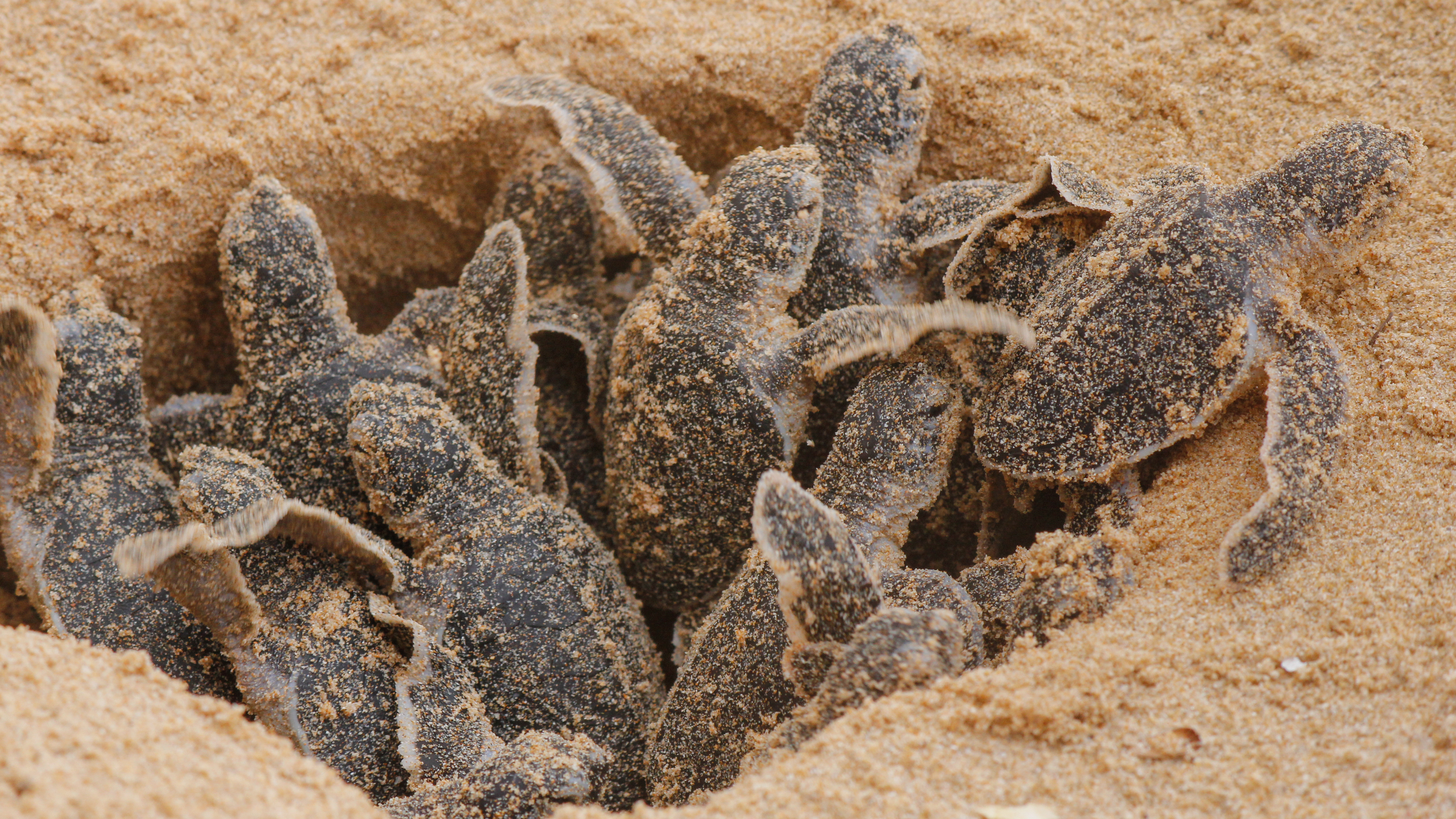
Every year from May through October, loggerhead sea turtles return to Hilton Head Island's beaches to nest. During your vacation, you may see protected nests, turtle tracks in the sand, or even hatchlings making their way to the Atlantic Ocean. A few simple steps help protect these remarkable animals while preserving one of Hilton Head's most cherished natural traditions.
Quick Takeaways
- Sea turtle nesting season runs from May through October.
- Most nests belong to loggerhead sea turtles.
- Keep beaches dark, clean, and free of obstacles after sunset.
The Return of Hilton Head's Loggerhead Sea Turtles
Long before Hilton Head Island became a vacation destination, loggerhead sea turtles were returning to these beaches every summer. Female turtles travel hundreds or even thousands of miles before coming ashore under the cover of darkness to lay their eggs in the sand.
Many turtles return to the same stretch of coastline where they hatched decades earlier. Thanks to Hilton Head's wide beaches and ongoing conservation efforts, the island remains one of South Carolina's most important sea turtle nesting areas. If you're visiting between May and October, there is a good chance you'll encounter signs of nesting activity during your stay.
What Do Sea Turtle Nests Look Like?
After a nest is discovered, it is marked with orange stakes and protective tape by the Sea Turtle Patrol Hilton Head Island. Volunteers walk the beach each morning looking for fresh turtle crawls and nesting activity.
You may notice:
- Orange stakes surrounding a protected nest
- Wide, symmetrical tracks leading from the ocean to the dunes
- Informational signs explaining nesting activity
If you spot fresh tracks that have not yet been marked, avoid the area and allow conservation volunteers to evaluate the site.
How You Can Help Protect Sea Turtles
Protecting sea turtles is simple and makes a meaningful difference.
- Keep Lights Off at Night Artificial light can confuse both nesting turtles and newly hatched sea turtles. Hatchlings naturally move toward the brightest horizon, which should be the moonlight reflecting off the ocean.
- Keep beachfront lights off, close ocean-facing blinds after dark, and avoid using flashlights on the beach at night.
- Stay Away From Marked Nests Sea turtle nests are carefully monitored throughout the incubation period. Please keep children, beach equipment, and pets away from all protected nesting areas.
- Fill In Holes Before Leaving the Beach A hole that seems harmless during the day can become a serious obstacle after dark. Nesting turtles and hatchlings can become trapped in deep holes or blocked by large sand structures. Before heading back to your vacation rental, take a moment to smooth the sand and fill any holes.
- Skip Flash Photography If you're fortunate enough to see a sea turtle at night, enjoy the experience from a respectful distance. Flash photography and bright lights can disturb natural nesting behavior.
When Do Sea Turtle Hatchlings Emerge?
Most loggerhead eggs incubate for approximately 60 days. As a result, hatching activity typically begins in late July and continues through October. When conditions are right, dozens of hatchlings emerge from the nest together and instinctively head toward the ocean.
Watching this journey is one of the most memorable wildlife experiences on Hilton Head Island. Occasionally, local conservation groups announce public hatchling releases or educational programs. Visitors staying during late summer and early fall may want to check local event listings for opportunities.
A Special Part of Every Hilton Head Vacation
Sea turtles have been returning to Hilton Head Island for generations. Their annual nesting season serves as a reminder that the island's beaches are more than a vacation destination—they are an important habitat for wildlife.
During your stay, consider taking an early morning beach walk. You may discover fresh turtle tracks in the sand and gain a new appreciation for one of Hilton Head Island's most remarkable natural traditions.
